The Differences Between B2B and B2C SEO Strategies
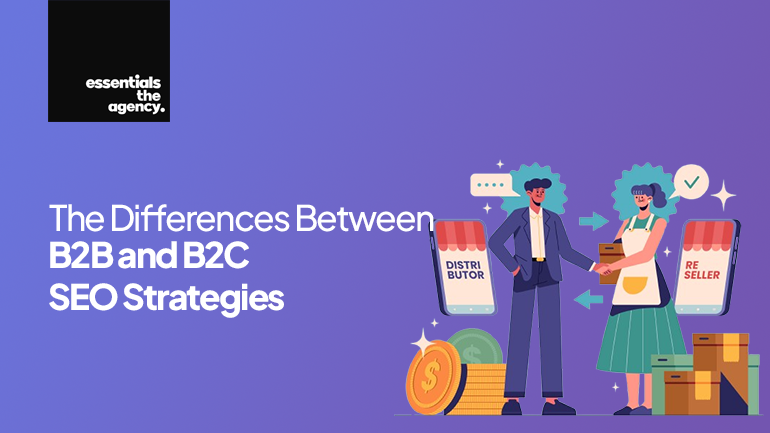
Getting high-quality B2B leads through SEO requires a completely different approach from what works in B2C. In this article, we’ll break down the key differences between B2C and B2B SEO strategies and explain how these differences influence keyword research, content development, conversion goals, and even technical optimization.
Why SEO Matters Differently in B2B vs B2C
Before diving deeper into the differences, it is important to understand that B2B and B2C audiences behave very differently online. Their motivations, decision-making processes, and search patterns are not the same. Because of that, the SEO strategies required to reach, educate, and convert them must also be distinct. In other words, you cannot apply a one-size-fits-all approach and expect to win in both markets.
Here are the core differences that shape how B2B and B2C SEO strategies work:
- B2B buying cycles are more complex and involve multiple decision-makers, while B2C consumers make quicker, more individual decisions.
- In B2B, search behavior leans toward specific, technical, long-tail queries; in B2C, people search for broader or transactional keywords.
- B2B content tends to be educational and authoritative (whitepapers, case studies), whereas B2C content is more visual, emotional, and sales-driven.
- Lead nurturing and trust building are central in B2B SEO. In B2C SEO, the emphasis is on driving immediate conversions.
The Key Differences in B2B vs B2C SEO Strategies
1. Audience & Decision Process
B2B
- The buying journey involves multiple stakeholders (managers, technical leads, procurement).
- Decisions are slower and require deeper evaluation and educational content.
- Content must address different roles and pain points across a longer sales cycle.
B2C
- Decisions are made individually and often driven by emotion or immediate need.
- The buying cycle is shorter, with quicker paths to checkout.
- Content focuses on excitement, convenience, and impulse triggers.
2. Keywords & Search Intent
B2B
- Keywords are typically long-tail, niche, and problem-solution oriented.
- Search intent skews toward informational or evaluative queries.
- Volume is lower but conversion intent is higher.
B2C
- Keywords tend to be high-volume, broad, and transactional.
- Search intent is often direct, where users want to buy, compare, or find deals.
- Success depends heavily on ranking for competitive queries.
3. Content Strategy
B2B
- Requires long-form, educational, and authoritative content (whitepapers, case studies, technical guides).
- Messaging must be precise, data-driven, and value-focused.
- Content nurtures leads through multiple funnel stages.
B2C
- Content is shorter, visual, engaging, and emotion-driven.
- Formats like reviews, listicles, videos, and social-friendly posts perform well.
- Messaging focuses on desire, benefits, and immediate action.
4. Conversion & Metrics
B2B
- Success is measured by lead quality, MQLs, demo requests, and pipeline impact.
- Conversion paths include forms, downloadable resources, or consultations.
- Attribution is more complex due to multi-step journeys.
B2C
- Primary metrics are conversion rate, revenue, CTR, and customer value.
- Conversion is direct, like add to cart, checkout, or sign up.
- Attribution is simpler and closer to real-time.

5. Link Building & Authority
B2B
- Prioritizes high-authority, industry-specific backlinks (research sites, trade publications, SaaS blogs).
- Fewer links, but higher relevance and credibility.
- Thought leadership is key.
B2C
- Link opportunities are broader, like from influencers, lifestyle blogs, ecommerce partners, viral content.
- Quantity plays a bigger role.
- Social signals and UGC can boost authority.
6. Technical SEO & Site Structure
B2B
- Sites tend to be complex with many product pages, resources, and documentation.
- Requires strong internal linking, taxonomy, and schema for knowledge-heavy content.
- Must support long user journeys across multiple sections.
B2C
- Requires fast, mobile-first, frictionless shopping experiences.
- Emphasis on page speed, product schema, and UX for conversion.
- Simple, intuitive navigation that mirrors user intent.
7. Budget & Time Horizon
B2B
- ROI takes longer due to slow sales cycles and high-value content development.
- Investment focuses on authority building and long-term positioning.
- Requires consistency and deep expertise.
B2C
- ROI appears faster because of simpler journeys and higher search volume.
- Budgets often go toward ranking high for competitive queries and seasonal campaigns.
- Quick experimentation is common.
Level Up Your SEO Strategy Now and Stay Ahead of the Competition
In a world where buyers rely on Google to research before they speak to a sales representative, your brand needs more than traffic. You need credibility, relevance, and authority in the search results they trust. A well-designed SEO strategy that aligns with your buyer journey is what sets winning brands apart.
Whether you are targeting businesses or consumers, an effective SEO approach must be built on clear intent, strong content, and long-term visibility.
Essentials the agency. helps both B2B and B2C brands develop and execute a complete SEO engine that attracts the right audience, nurtures them with valuable content, and turns interest into measurable growth.
Ready to transform SEO into your most powerful lead and revenue generator? Reach out to essentials the agency. today.
it is important to understand that B2B and B2C audiences behave very differently online. Their motivations, decision-making processes, and search patterns are not the same.